
Université Joseph Fourier Grenoble, France
Laboratoire Génie-électrique Grenoble (G2ELab)
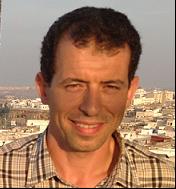
Professor Seddik Bacha received the Engineering and Magister degree from École Nationale Polytechnique of Algiers in 1982 and 1990, and the PhD and HDR degrees in 1993 and 1998 from Polytechnic Institute of Grenoble, France, respectively. He is presently the manager of the Power System Group in the Grénoble Electrical Engineering Laboratory and Professor at the Université Joseph Fourier, Grenoble. His interests are power electronics systems, power quality, and renewable energy.
Title: Power electronics offers for the future
supergrid
Abstract: Renewable energy
systems are increasing hugely these past years. The amount of the grid connected
renewable, excepting large hydro plants, represents more than 300 nuclear
units. Both transmission and distributed grids are not designed for such
quantity. The renewables are, surely, mandatory in the energy mix but their
integration must fulfill with some rules regarding mainly frequency and voltage
stability. The various grid codes increase the degree of exigency making
operators, producers, manufacturers obliged to control more drastically the
different energy fluxes. Power electronic systems are in the middle of the
solutions set.
Dr. Driss BENHADDOU
University of Houston
Department of Engineering Technology
College of Technology
Houston, United States
Dr. Driss Benhaddou is a Fulbright scholar and an Associate Professor at the University of Houston (UH), Texas. He was a Fulbright visiting Professor at Al Akhawayn University, School of Science and Engineering during academic year 2012/2013. He is actively involved in optical networking, sensor networks research activities, and network-centered smart systems. He developed state of the art wireless and optical networking research lab (http://www.tech.uh.edu/won) and the AT&T lab (http://www.tech.uh.edu/att) at UH. Dr. Benhaddou has an extensive industrial experience with Lambda Optical Systems and Sprint, where he played a key role in protocol development and systems integration activities. He holds two doctoral degrees in optoelectronics and telecommunication networking from the University of Montpellier II, France, in 1995, and the University of Missouri in 2002.
Title: Wireless
Sensor Networks for Distributed Renewable Energy in Smart Grid
Prof. Enrique J. DEDE
University of Valencia.
R&D Director at the company GH Electrotermia S.A.
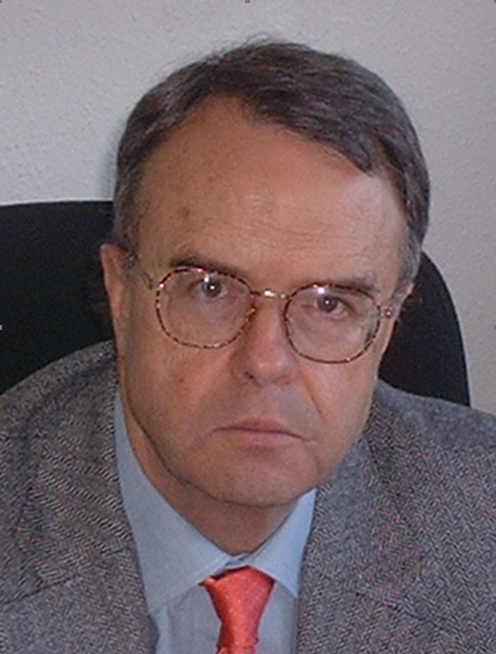
Professor. Enrique J. Dede obtained his PhD in Electronics from the University of Valencia. Full Professor in Power Electronics at the University of Valencia since 1991 and R&D Director at the company GH Electrotermia S.A.
Dr. Dede holds several international patents on high frequency inverters for induction heating and has written more than 200 papers in the field of Power Electronics. He has more than 30 years experience in the field of Power Electronics and particularly in the design of high frequency inverters for induction heating, telecom power and recently in the conception and design of fast DC chargers for EV´s.
Prof. Dede was former member of the European Working Group of the IAS-IEEE, past President of the joint Spanish IEEE Chapter of the Power Electronics Society (PELS) and Industrial Electronics Society (IES) and was the General Chair of the European Power Electronics Conference-EPE 2009- held in Barcelona (Spain), with more than 1.000 delegates.
Dr. Dede is actually serving as the Vice- President of the European Power Electronics Association (EPE) and he is member of the International Advisory Board of the PCIM-Europe and PCIM-Asia.
Title: e-Mobility, a key technology for achieving the 2020 EU objectives